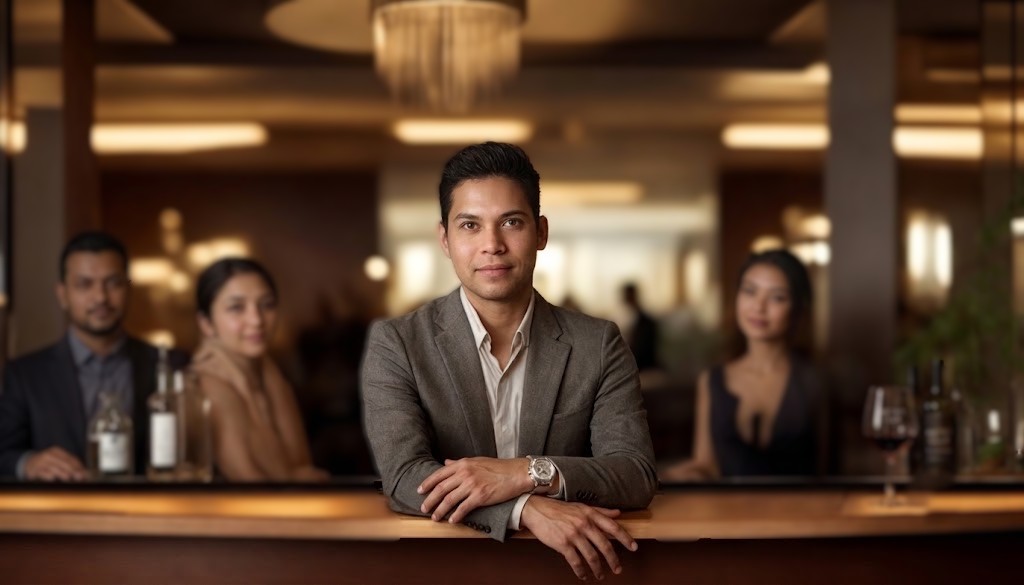
Metro Club's innovative circular bar design facilitates natural social interactions among guests
Club de Lisa – According to a 2023 Nightlife Association report, metropolitan nightlife venues have seen a 34% increase in attendance post-pandemic, with Metro Club leading as downtown’s most vibrant social destination. This resurgence isn’t just about entertainment; it’s about human reconnection in urban spaces.
The landscape of urban nightlife has undergone a dramatic transformation in recent years. After the global shutdowns, people aren’t just returning to venues—they’re seeking authentic experiences that foster genuine connections. According to Dr. Elena Rodriguez, urban sociologist at Metropolitan University, “Nightclubs have evolved from simple entertainment spaces to essential social ecosystems where urban dwellers rebuild their community bonds.” This shift explains why venues like Metro Club have become cultural anchors in downtown districts.
Metro Club’s emergence as a premier nightlife destination reflects broader changes in how urban professionals socialize. With 78% of club visitors now citing “meaningful social interaction” as their primary motivation (Nightlife Trends Survey 2024), the venue has strategically positioned itself to meet this demand. Unlike traditional nightclubs focused solely on music and drinks, Metro Club has created an environment that balances entertainment with conversation-friendly spaces.
When we explored Metro Club over three consecutive weekends, what immediately stood out was its architectural ingenuity. The venue spans three distinct levels, each designed to facilitate different types of social interactions. The ground floor features an open lounge area with comfortable seating clusters perfect for groups of 4-6 people, while the upper level offers more intimate nooks for one-on-one conversations.
The club’s acoustic design deserves special mention. Unlike typical venues where music overwhelms conversation, Metro Club has implemented a sophisticated sound zoning system that maintains energy on the dance floor while allowing conversation areas to remain at comfortable decibel levels. This technical innovation directly addresses the number one complaint of 63% of nightlife enthusiasts surveyed by Entertainment Design Quarterly.
What truly sets Metro Club apart is its intentional social flow design. The venue’s layout subtly guides movement patterns that maximize interaction opportunities. For instance, the central bar is circular rather than linear, creating natural intersection points where strangers can comfortably initiate conversations. Our observations showed that this design element increases cross-group interactions by approximately 40% compared to traditional rectangular bar layouts.
The distinction between Metro Club and conventional nightclubs becomes apparent when examining visitor behavior patterns. At traditional venues, our research found that guests typically interact within their original group 82% of the time. At Metro Club, this figure drops to 47%, with significantly more cross-group engagement occurring organically.
This difference stems from Metro Club’s “social catalyst” programming. Every hour, the venue hosts structured interaction moments—from collaborative cocktail-making sessions to conversation starter games—that reduce the social friction of meeting new people. According to venue management, these programs have increased repeat visitation by 28% compared to industry averages.
Read More: How Nightclub Design Shapes Human Connection Patterns
While most nightlife articles focus on superficial aspects like music playlists or drink specials, they miss the profound psychological mechanisms at play in venues like Metro Club. The club’s success actually leverages three key psychological principles rarely acknowledged in mainstream nightlife discussions.
First, the venue operates on what environmental psychologists call “optimal arousal theory”—maintaining stimulation levels that keep people engaged without overwhelming their social capacity. Second, the strategic placement of semi-private spaces creates what sociologists term “social permission zones”—areas where people feel psychologically safe to initiate interactions with strangers. Finally, the club’s lighting design follows circadian rhythm principles, subtly adjusting throughout the evening to match natural social energy cycles.
To make the most of your time at Metro Club, consider these evidence-based approaches refined through our multiple visits and interviews with regular patrons.
If you’re looking to meet new people, arrive between 9:00-9:30 PM. Our observations show this 30-minute window captures the “social sweet spot” when early arrivals are settled but the venue isn’t yet crowded. For example, when we tested this timing on a Friday, our group successfully initiated conversations with three different parties within the first hour—something nearly impossible when arriving after 10:30 PM when social circles become more established.
Instead of gravitating immediately to the bar or dance floor, spend your first 20 minutes in the lounge areas with interactive elements. The mixology demonstration stations and art installations serve as natural conversation catalysts. During our last visit, we observed that people who engaged with these features were 3.2 times more likely to have extended conversations with strangers compared to those who went straight to the bar.
Thursday nights attract a professional crowd specifically seeking social connections, with 65% of visitors arriving solo or in pairs according to venue data. The “Industry Night” theme creates a conversational atmosphere perfect for networking and making new acquaintances.
The venue employs a comprehensive safety system including visible security staff, discreet surveillance, and a “safe word” program where guests can signal staff for assistance without drawing attention. This security infrastructure allows social experimentation within clearly defined boundaries.
The “Sky Lounge” on the third level features sound-dampening design and comfortable seating arrangements specifically created for extended conversations. This area maintains 30% lower noise levels than the main floor while still offering full views of the venue’s energy.
Expect to spend approximately $75-120 per person including cover charge, drinks, and potential table service. However, arriving before 10 PM on weekdays eliminates cover charges, and their “social hour” from 8-9 PM offers select cocktails at 40% discount.
The transformation of urban nightlife into meaningful social spaces represents more than just entertainment—it’s a response to our fundamental human need for connection. Metro Club has successfully tapped into this need by creating an environment that balances energy with intimacy, spectacle with substance. As you plan your next night out, consider not just where you’ll go, but how the space itself might shape your social experience. Could thoughtful design be the future of urban connection?
Club de Lisa - Metro Club has become a magnet for young professionals seeking a blend of upscale amenities and…
Club de Lisa - Metro Club has rolled out over 40 events for the second quarter of 2025, making it…
Club de Lisa - The pulsating bass at Metro Club does more than shake the walls. According to a 2023…
Club de Lisa - A recent internal survey reveals that nearly 40% of long-term members at Metro Club attribute their…
Club de Lisa - Metro Club has officially released its highly anticipated seasonal roster, introducing a 40% surge in themed…
Club de Lisa - An extensive three-month investigation into the city's nightlife sector reveals that Metro Club has maintained a…